We use cookies to personalise site content, social media features and to analyse our traffic. We also share information about your use of this site with our advertising and social media partners.
FEATURED
SPONSORED
VERIFIED
Apr 2 -
5 minutes, 21 seconds
-7.2K Views 12 Comments 0 Likes 0 Reviews
When we see wars and geopolitical conflicts, we often think about soldiers, missiles, and political press conferences. However, many people don't realize how deeply these events affect the lives of ordinary people. It's not just those in conflict zones; millions of families around the world are simply trying to get through the day.
On February 28, 2026, the United States and Israel launched surprise airstrikes across Iran. Iran retaliated swiftly, and since then, the conflict has grown into something far larger than a regional standoff. Nearly several weeks into the war, thousands of people have died across the Middle East. Complete neighborhoods are in ruins, and many families have been forced to leave their homes.
This isn't just a story about governments and armies. It also highlights how such events silently change the daily lives of people everywhere.
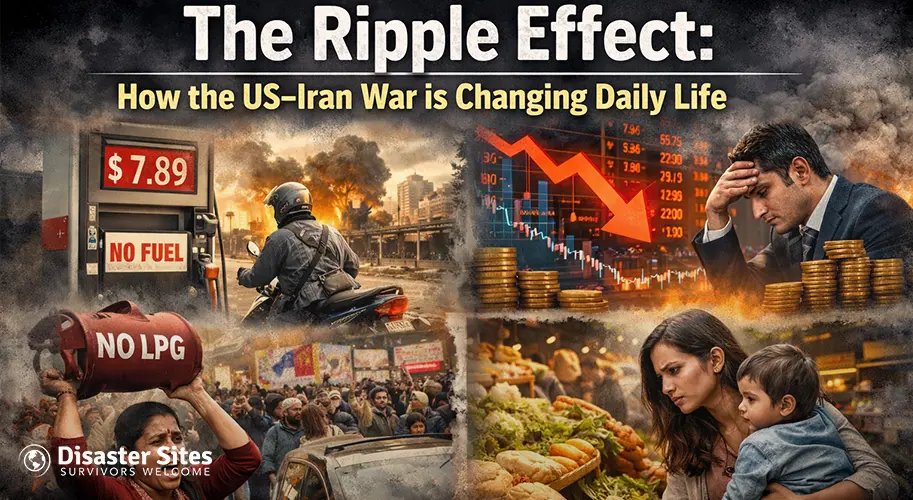
One of the most immediate ways this conflict affects ordinary people is through increasing fuel costs.
The conflict has disrupted the Strait of Hormuz, one of the world's most critical oil shipping routes, with approximately 2,000 vessels and 20,000 seafarers stranded there. When oil can't flow freely, energy prices everywhere go up.
This is the ripple effect in real life: a strike thousands of miles away becomes a more expensive commute for a worker.
The OECD has sharply raised its inflation forecasts for major economies, now projecting the average rate for G20 economies to soar to 4% this year, while also downgrading its global growth forecast from 3.3% to 2.9%. Stock markets have been unstable, and investors are anxious. Changes in currency values, increasing interest rates, and uncertainty about energy supplies all contribute to economic instability that affects:
- Savings and pension funds
- Small business operating costs
- Job security in export-heavy industries
- Mortgage and loan rates in countries linked to global financial markets
While headlines highlight crude oil and global markets, a more personal crisis is happening right in people's homes: the cooking gas cylinder.
In India, protests began in New Delhi on March 13, 2026 with people taking to the streets over price hikes and supply issues related to LPG cylinders. This is a direct result of the US-Israel conflict with Iran. For millions of households that rely on LPG for cooking, this isn't just a policy debate. It's a daily emergency.
Experts at CSIS have flagged that the conflict is driving fertilizer shortages and soaring food costs, raising concerns about food insecurity from the Middle East to the rest of the world. Many fertilizers are derived from natural gas, and with energy infrastructure severely disrupted, the consequences are spreading into agriculture.
The US–Iran conflict is a reminder that in today's deeply connected world, no event happens in a vacuum. Oil markets, food supplies, global economies, refugee flows, and human emotions are all part of an invisible web, and when one part of that web is shaken hard enough, everything else trembles.
Understanding these ripple effects isn't about taking sides. For live updates on how global conflicts and disasters are affecting communities worldwide, visit Disaster Sites for more live updates and real insights. When the world shifts, they're the first to know.

“To assist disaster survivors by providing a source for them to come together in time of need, to aid in the listing of events, information and other forms of assistance, and continuing support through the recovery process.”

Share this page with your family and friends.